

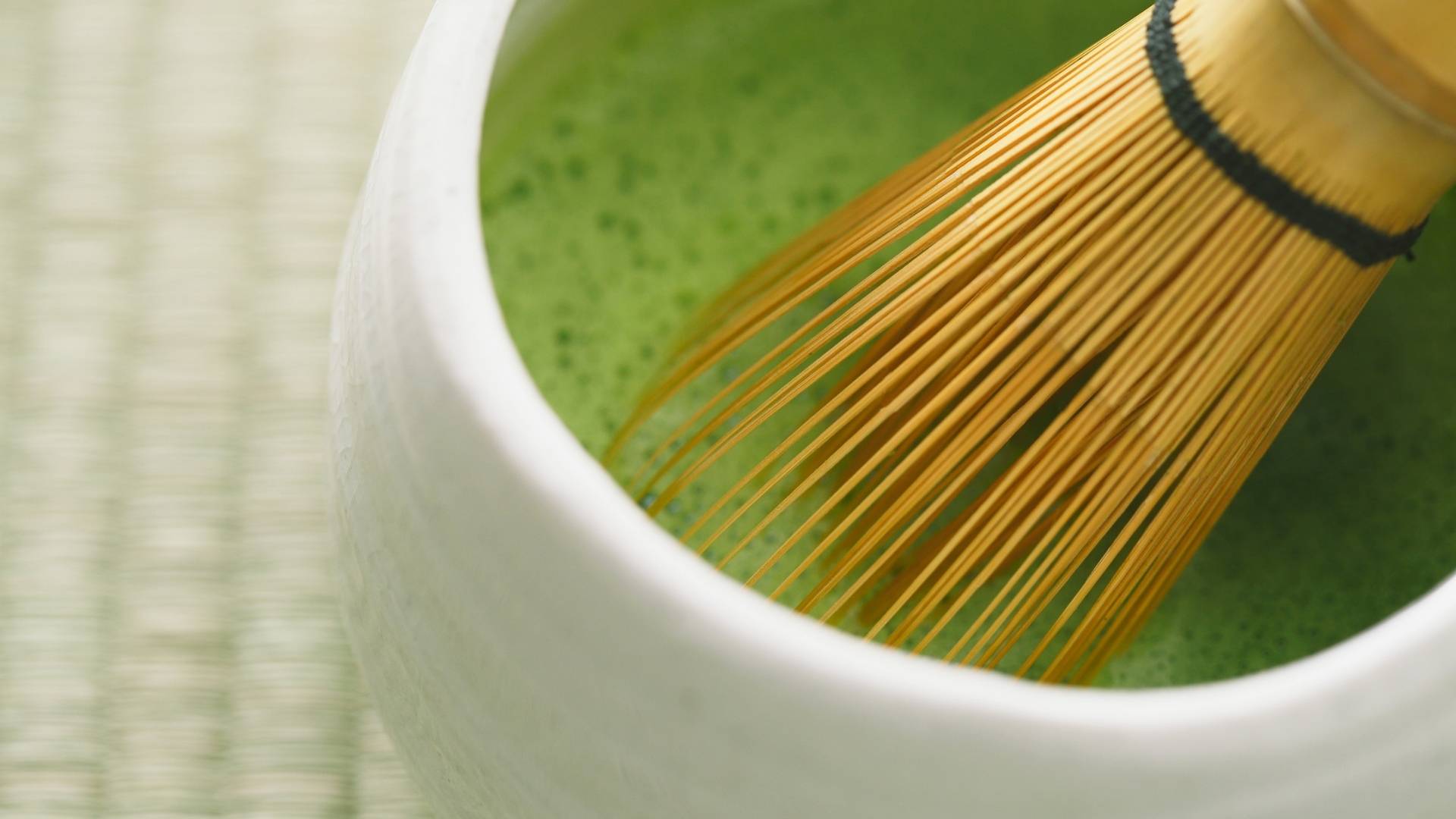
If you drink matcha often, this question has surely crossed your mind more than once. Because yes, it's all very well that it gives you energy, helps you concentrate and makes you feel like a functional person before 10 in the morning… but you also want to know exactly how much theine matcha tea has, right?
And no, it's not an absurd question at all. When you choose between matcha, coffee or any other drink to start the day, it's normal to want to know how it's going to benefit you and whether you'll later have an energy crash, as if it were a rollercoaster.
Matcha has a reputation for being stimulating, but in a more manageable way. Less of a momentary hit, but much more stability. Less "I'm going all in" and more "hey, I'm actually pretty focused today". So let's get to the point: how much theine it has, how it differs from coffee and what you can really expect when you bring it into your routine.
Matcha tea vs coffee: what really changes?
Here's the thing. Because often you're not just asking how much theine matcha has. What you really want to know is whether it can replace coffee, so you can have it without leaving you shaking like a leaf.
And the answer is that it depends on what you're after.
If you're one of those people who needs an immediate hit to get back to planet Earth in the morning, coffee plays in another league. Matcha, however, takes a different path. It doesn't usually come in like a kick in the door, but it can give you longer-lasting natural energy.
Put simply:
- coffee tends to be felt sooner
- matcha tends to last longer
- coffee can make you a little wired
- matcha tends to be gentler if you're sensitive to stimulants
So no, they don't feel the same in the body. Although on paper they might seem comparable, in practice the body experiences it differently.

What sets matcha apart?
The beauty of matcha isn't just in the theine, but in how it comes accompanied.
With coffee, the caffeine quickly takes the stage and makes itself felt straight away. Great if you want to wake yourself up at some specific moment. That said, a few hours later your heart is surely doing breakdance and your head is thinking about the day's second coffee.
With matcha, all this changes completely. It contains L-theanine, an amino acid that modulates the stimulating effect and makes the energy release in a muuuch more gradual way.
What does that translate into?
Into many people noticing more mental clarity, more focus and less of that feeling of being on the verge of a nervous breakdown. It's not that matcha doesn't activate you, no. In fact, of course it does, but it usually doesn't do it so explosively, so to speak.
That's why some people have it to work, study or simply to survive a Monday at the office in the best way possible.
What has more theine, green tea or matcha tea?
Here matcha wins hands down.
The difference is fairly easy to understand. When you have steeped green tea, you extract part of the leaf's compounds. However, when you have matcha tea, you're drinking the whole leaf as powder. It all goes in!
That's why matcha usually has more theine than traditional green tea.
Here are some figures to give you an idea:
- traditional green tea: 20-40 mg per cup
- matcha tea: 30-70 mg per cup
Also, it's not just a matter of knowing how much theine matcha tea has. Its effect tends to feel longer and more stable, so it doesn't all come down to a number.
What influences the amount of theine in matcha?
Not all matchas are the same. And yes, that also shows in how they affect you.
1. Matcha quality
Ceremonial matcha is usually made with younger, more carefully tended leaves, and that can translate into a higher content of theine and other interesting compounds.
2. Shading of the crop
Before harvest, the plants are covered to reduce sunlight. That process alters the composition of the leaf and favours a higher concentration of chlorophyll, L-theanine and theine.
In other words, the more care there is in the cultivation, the more likely the matcha turns out like the one we have in our shop.
3. The amount of matcha tea you use
It seems obvious, but this is where a lot of people slip up. Making a cup with 1 gram isn't the same as getting carried away and adding 2 grams "by eye". To measure the amount you need, we have just the thing: Stainless steel measuring spoon
Does matcha keep you awake?
It can, yes. But it depends on many factors.
Although matcha usually feels gentler than coffee, it still has theine. So, if you're sensitive to stimulants, having it late in the afternoon won't be the best idea.
That said, there are people who have it in the afternoon and can be snoring within 30 minutes. Others, on the other hand, have it late and then end up at two in the morning replaying conversations from 2017. Every body is different!
The dose also matters. The more matcha you have, the more likely it is to activate you. If you don't want to risk it, it's better to leave it for the morning or early afternoon. And if even so you find it hard to fall asleep but you want all the properties of matcha tea, hojicha is your ideal option. Discover it!

When to have matcha to make the most of its theine?
The time of day changes the picture quite a bit.
In the morning
It's probably the best option if you want to wake yourself up without reaching for coffee. It gets you going, but without that feeling of having plugged your brain into a power strip.
Before working or studying
A very good idea if you need focus for several hours. Many people use it for exactly this, and from what our customers tell us, it has worked wonderfully for them. That said, it won't learn the lesson for you. Matcha will help you, but it doesn't work miracles.
Before training
It also fits really well here. Many athletes are choosing to have matcha before training, since thanks to its properties they get that boost of energy they need, as well as helping with fat loss.
In the afternoon
You can, as long as you're not very sensitive to caffeine. If you tolerate it well, you won't have any problem.
Matcha tea, theine and productivity: why it works
One of the reasons why so many people have switched to matcha isn't just the energy, but how it feels.
It isn't usually the typical high with an "I'm going to take on the world today" face only to leave you drained two hours later. It helps you stay awake, focused and a bit more functional without throwing a party in your nervous system.
That's why it fits so well into long days, mornings of heavy work or days when you need to keep your head on straight.
In terms of amount, as a general reference:
- 1 to 2 grams a day: the most common
- 2 to 4 grams a day: a high intake
- more than 4 grams a day: here it's worth easing off
Because yes, even though matcha is gentler than coffee in many cases, it's still a stimulant.

Additional benefits of matcha beyond theine
Although theine gets almost all the attention, matcha doesn't stop there.
- antioxidants: it stands out for its catechin content, especially EGCG
- more of a feeling of calm: thanks to L-theanine
- metabolism support: it can slightly contribute to energy expenditure
- nutritional value: it contains vitamins, minerals and chlorophyll
In other words, it's not just a drink to wake yourself up. It also has a fairly complete profile, which is why many people add it to their routine for more reasons than energy.
So, is it worth having matcha?
Matcha usually provides between 30 and 70 mg of theine per cup, although the exact figure depends on the quality, the amount you use and the way you prepare it.
But to be honest, what matters isn't just the figure. What matters is how it makes you feel.
Now that you know how much theine matcha tea has, if you're looking for more stable energy, more focus and an alternative to coffee, matcha tea is your best option. It's not magic, but it's a small change in your life that's going to give you much more than you think.
Don't know where to start? Come into our shop and discover everything we can offer you, from the best-quality matcha and flavoured matchas to natural, healthy infusions.

Share:
David Bernardo
Matchaflix's CEO
David is the founder and CEO of Matchaflix, a company born out of his passion for matcha tea and a healthy lifestyle. With extensive experience in the business world, David has led Matchaflix to become a leader in high-quality matcha products. Always looking to innovate, he now shares his knowledge about this wonderful tea on the blog, where you’ll find recipes, tips, and fun facts to help you enjoy matcha to the fullest.