

If you've ever found yourself making your morning matcha and thinking “this can't just be a fad”, you're on the right track. Matcha tea has something that hooks you, we know it. Not just for its flavour, which is unlike any other tea, but for everything behind it: history, rituals… Because yes, it gets talked about a lot, but it isn't always well explained where it's from or why it has ended up taking centre stage in cups, recipes and conversations.
At Matchaflix we see matcha for what it is: a tea with a lot of history. To talk about the origin of matcha tea is to talk about long journeys, monks with infinite patience, tea leaves treated with almost obsessive care and a culture that understands tea as something more than a drink.

Where did matcha tea originate?
To properly answer the question “where is matcha tea from”, you have to travel several centuries back and accept a small historical paradox. Although these days we almost automatically associate matcha with Japan, the story actually begins in China. There, during the Tang dynasty and, later, the Song dynasty, ground green tea was already being consumed. The leaves were steamed, pressed into blocks and, before drinking, ground into a fine powder that was mixed with hot water.
That Chinese powdered tea was the direct ancestor of today's matcha. However, over time, China gradually abandoned that way of preparing it. Other methods appeared, other fashions and other ways of understanding tea. The curious thing is that while in China the powder was being left behind, in Japan it had just found its place.
It was in the 12th century that a Japanese Buddhist monk named Eisai returned from China with tea seeds and, most importantly, with the knowledge of how this almost miraculous product was grown and prepared. Eisai didn't just bring plants, he brought a philosophy. For Zen monks, tea wasn't a simple accompaniment, but a real aid for concentration and meditation. Drinking matcha helped them stay awake without the jitters of other drinks. Something like being alert for hours, but with a lot of peace.
Japan and the identity of matcha
From there, Japan didn't simply copy what it had learned. For centuries it kept perfecting every detail of the process until it made matcha something of its own.
From the cultivation to the way of preparing it, everything was fine-tuned with almost obsessive precision. That's how a very particular relationship was born between matcha and Japanese culture, especially through the tea ceremony.
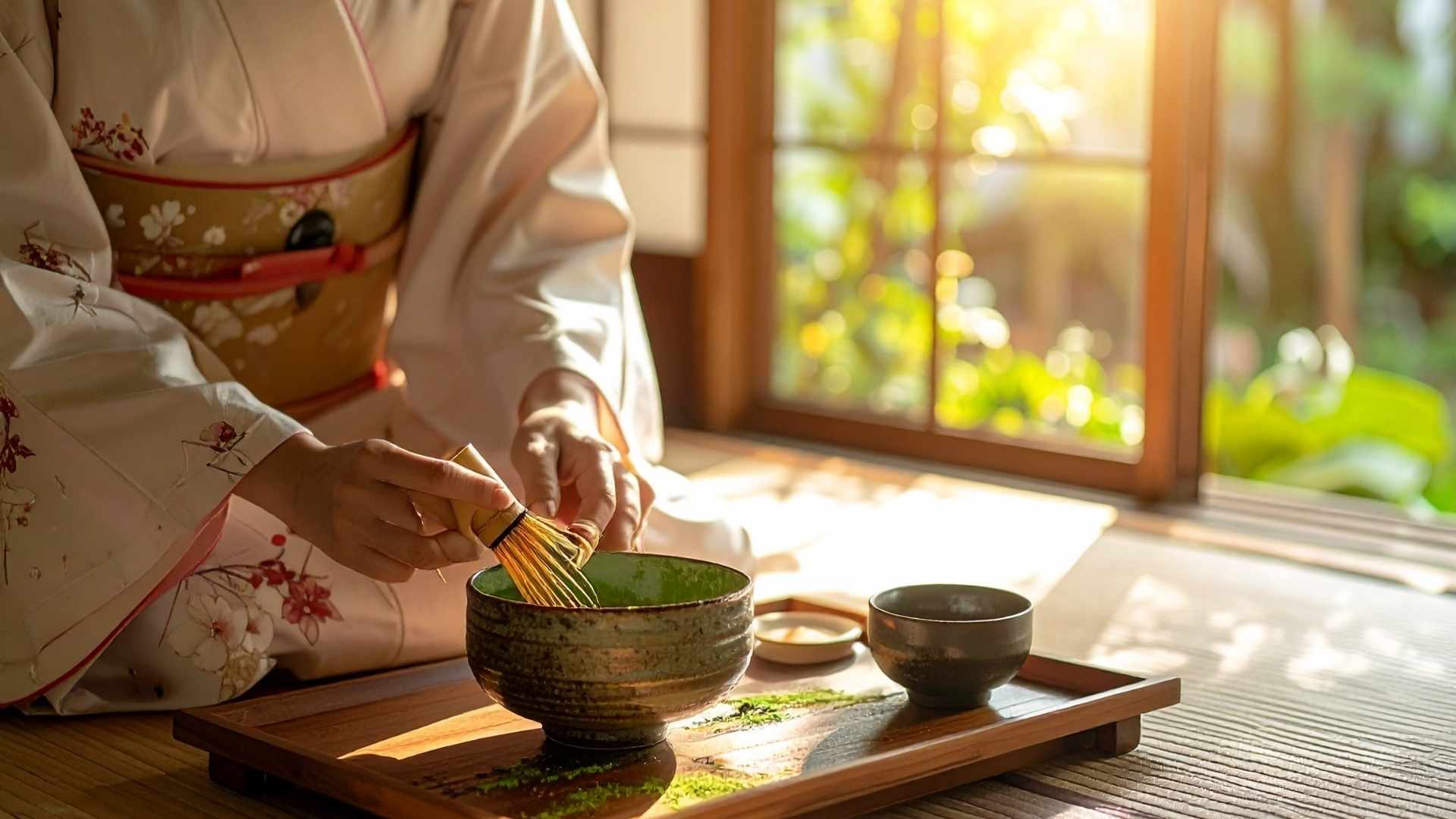
Far from being something rigid or overly ceremonial, this practice puts the focus on the present moment and on respect for the product. Matcha isn't drunk in a hurry; it's prepared by putting your best energy into it and enjoyed with great calm. That way of understanding tea is still very much present today.

The Japanese origin of today's matcha
When someone asks about its provenance today, the clear answer is Japan. That's where matcha is produced as we know it now. Regions like Uji, in Kyoto, or Nishio, in Aichi, have been growing tea destined exclusively to become matcha for generations. The climate, the soil and the accumulated experience make these areas a worldwide benchmark.
What's more, growing matcha has very specific characteristics. The plants are kept in the shade during the weeks before harvest, which intensifies their colour and flavour. Afterwards, the leaves are steamed, dried, cleaned and slowly ground in stone mills. A slow process, yes, but key to understanding why matcha isn't just any tea.
Understanding where matcha comes from
Knowing the origin of matcha tea isn't about knowing facts for the sake of it. It's a simple way to appreciate what you have in your cup. Knowing that this green powder comes from a centuries-old tradition, from patient work and from a culture that takes care of the detail changes the way you consume it.
Matcha isn't a recent fad, even if it's now more present than ever. Its popularity is new, but its history isn't. And understanding its history helps to separate the authentic from what only carries the name.
At Matchaflix we believe matcha doesn't need exaggeration to stand out. With its origin, its process and its flavour, it already has plenty to tell. And if you still haven't been tempted to try it, don't waste any more time!
We recommend you start with our 100% premium matcha, but if you want an experience completely true to its origin, we recommend our Japanese ceremonial matcha tea. You'll love them!

Share:
Alba Bernardo
Cofundadora en Matchaflix
Alba, hermana de David, es una apasionada del bienestar y de los productos naturales. Como cofundadora de Matchaflix, se ha unido al blog para compartir su amor por el matcha, ofreciendo recetas originales y consejos prácticos para integrarlo en el día a día. Su enfoque creativo y cercano hace que cada receta sea fácil de seguir y perfecta para cualquier ocasión.