

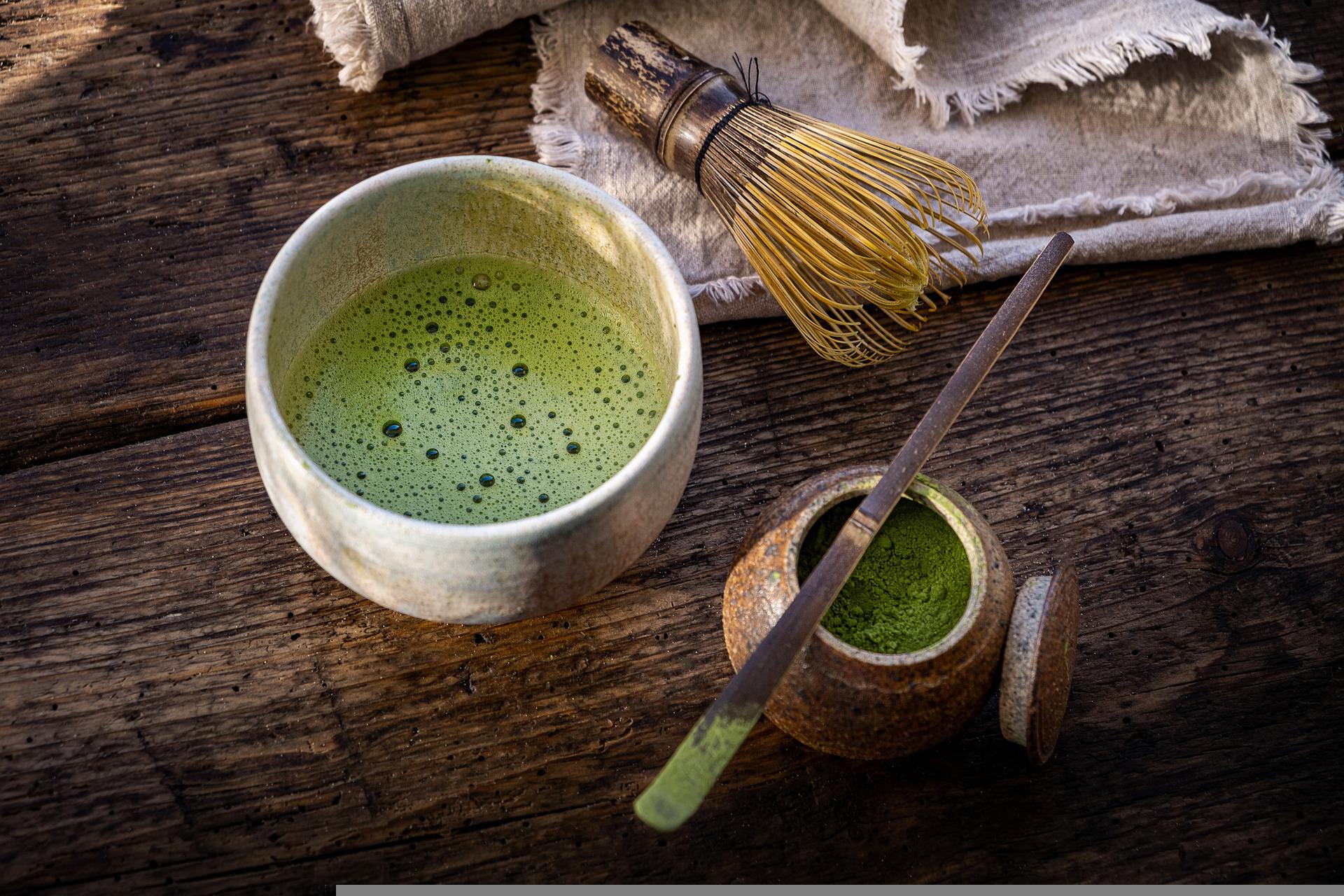
Making matcha takes less than two minutes. The hard part was never the technique, but repeating it morning after morning until it stops being a recipe and becomes a moment of the day you miss when you skip it.
Before the steps, it helps to understand what you actually have in the bowl, because it explains almost everything that follows. Matcha is whole green tea leaf, shade-grown for the last few weeks before harvest and stone-ground into powder. That is the difference from ordinary tea: you don't steep the leaf and throw it away, you drink the whole thing. That is why quality shows so plainly, and why the color gives it away before you've even tasted it. A vivid green comes from young, shade-grown leaf; a dull green, from coarser or poorly stored leaf. In a regular infusion, a mediocre leaf can hide; in matcha there is nowhere to hide, which is why it's worth starting with matcha that's actually good before you worry about the gear.
What You'll Need
You don't need the full kit to get started, though every piece of the Japanese ceremony exists for a specific reason and not for decoration.
A fine-mesh strainer handles the sifting, the step most people skip and the one you notice most.
The chashaku, the traditional bamboo scoop, gives you the right amount without reaching for a scale.
The chawan, the wide handmade bowl, has that shape precisely so the whisk can move freely.
And the chasen, the bamboo whisk, breaks up the powder with its fine tines in a way no fork or metal whisk can match.
The Five Steps
Start by measuring. One gram per cup is the standard, and it's what most people drink day to day. If you've been at it a while and want something stronger, go up to a gram and a half or two; there's no need to push past that. With the chashaku, two heaping scoops come out to roughly that gram, so the scale stays in the drawer.
Then sift. Pass the powder through the strainer straight into the bowl, and if any lumps stay behind, press them through with the scoop until they fall. It looks like a skippable step and it isn't: without sifting there's no foam, and the lumps you don't break up now end up at the bottom of your cup.
Next comes the water, and this is where the whole thing is won or lost. Between 160 and 175 °F, never boiling. If your kettle doesn't hold a temperature, just let the water sit off the heat for a couple of minutes before you pour. Start with a short splash, just enough to loosen the powder into a paste, and add the rest once there's nothing dry left.
Now whisk, with the chasen, in a zigzag. Quick but loose movements from the wrist, no circles, no pressing into the bottom of the bowl. Fifteen to twenty seconds is enough for the surface to come up in a fine, even foam, and you'll know it's ready when the whisk stops meeting resistance.
All that's left is to drink it, hot and unhurried. It's a small cup and it's gone in a few sips, but the point of everything above lives right there.
If You're More of a Latte Person
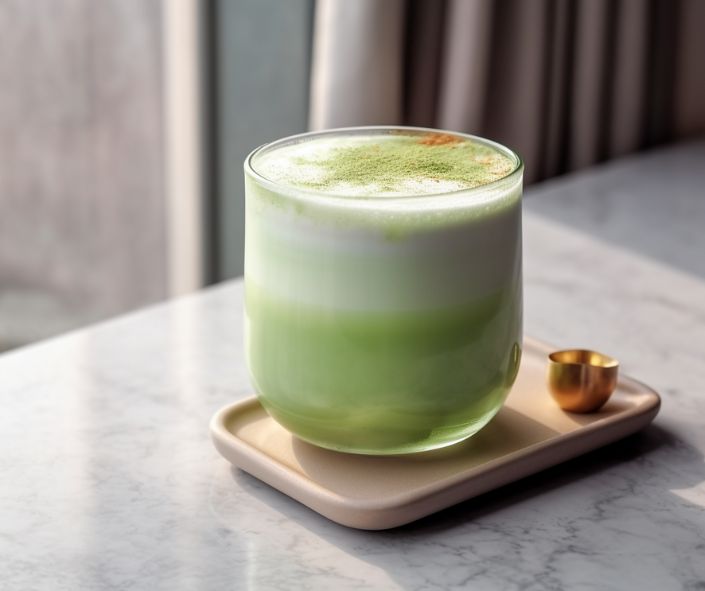
The milk version works just as well, and it's how a lot of people get started. Loosen one or two grams with a little hot water, exactly as before, then pour eight ounces of milk or a plant-based drink over the top. Iced is the same thing, over ice. The texture comes out foamier and the flavor softer, without the matcha taking a back seat.
If you'd rather have it all handled in a single tin, our powdered lattes come ready to mix with whatever milk you already keep on hand, and they're the easiest way to rotate through flavors without setting up the whole ceremony every morning.
The Mistake We Hear About Most
Boiling water, nearly every time. It scorches the leaf and pulls out all the bitterness at once, and then the matcha takes the blame for a problem that started with the kettle. If yours tastes bitter, lower the temperature before you go looking for a different matcha: in most cases that alone fixes the flavor.
When and How Much
Most people drink one or two cups a day, in the morning or early afternoon. If you turn in early, it's better not to go past mid-afternoon, since matcha contains caffeine. As a general reference, it's also best to stay under five grams a day.
Then there's the boring part, which happens to be the part that works: consistency matters far more than quantity. One cup every day does more than three on Monday and none for the rest of the week.
The Japanese have a word for what you're after in those few minutes, zanshin, which translates roughly as complete presence: a calm alertness, with no tension and no drifting. You don't get there in one cup, or in the first week. You get there through a routine that repeats, because consistency ends up achieving what urgency never can.

Share:
David Bernardo
Matchaflix's CEO
David is the founder and CEO of Matchaflix, a company born out of his passion for matcha tea and a healthy lifestyle. With extensive experience in the business world, David has led Matchaflix to become a leader in high-quality matcha products. Always looking to innovate, he now shares his knowledge about this wonderful tea on the blog, where you’ll find recipes, tips, and fun facts to help you enjoy matcha to the fullest.